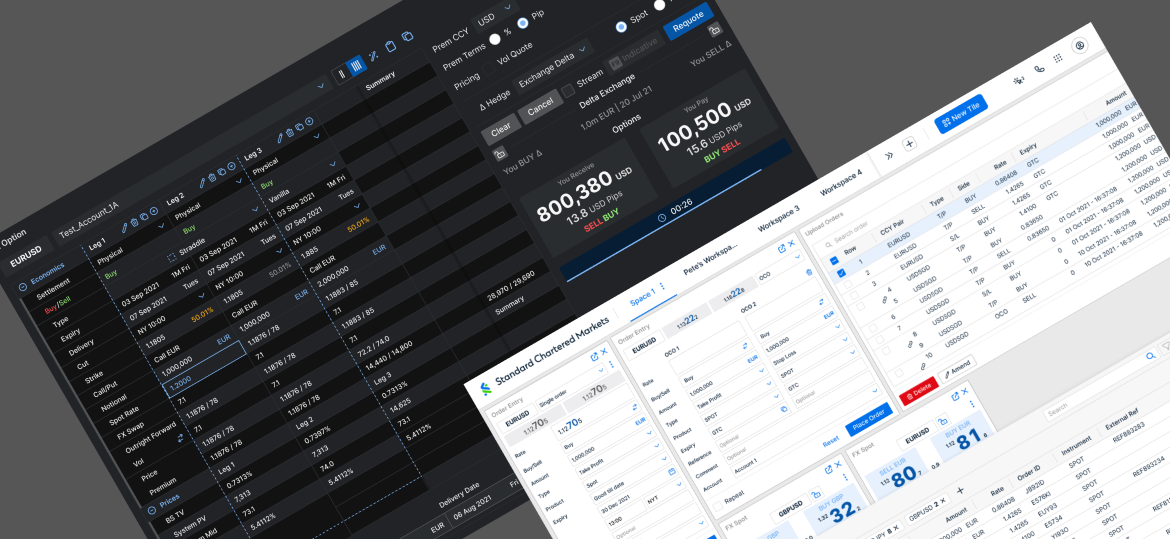
FX Order Management System
My role was to provide the full product design for the orders functionality on Standard Chartered's single dealer portal to meet the needs of both expert traders and casual users while retaining all the advanced features expected from a financial trading platform and its most popular legacy features.
I also managed a small agency team based in Singapore, who helped with components and UI design elements. Working across time zones required synchronised working procedures that needed to be managed.
Key Challenges
- There was no initial brief or set requirements, and there was no established design process in place, so the very start of the project was already a challenge and required steps to research and analyse what was needed.
- User testing challenges: Traders were extremely busy, making it very hard to gather feedback on designs. Solutions to this were to create usability surveys that incorporated Figma prototypes to gather their input in their own time.
- Remote Team Management: Coordinating with the agency in Singapore provided timezone constraints that required daily communications and feedback.
- Complex Workflows: FX order management is complicated, with many order types and steps that needed to be made simple and user-friendly. My own experience trading on similar platforms helped me understand what was needed and how to bring everything together.
Outcomes
The redesigned order management system improved the user experience among both in-house traders and retail traders, from the functionality and accessibility to how users interacted with it while retaining all the features the users were familiar with, allowing Standard Chartered to offer a competitive trading experience across their client base.
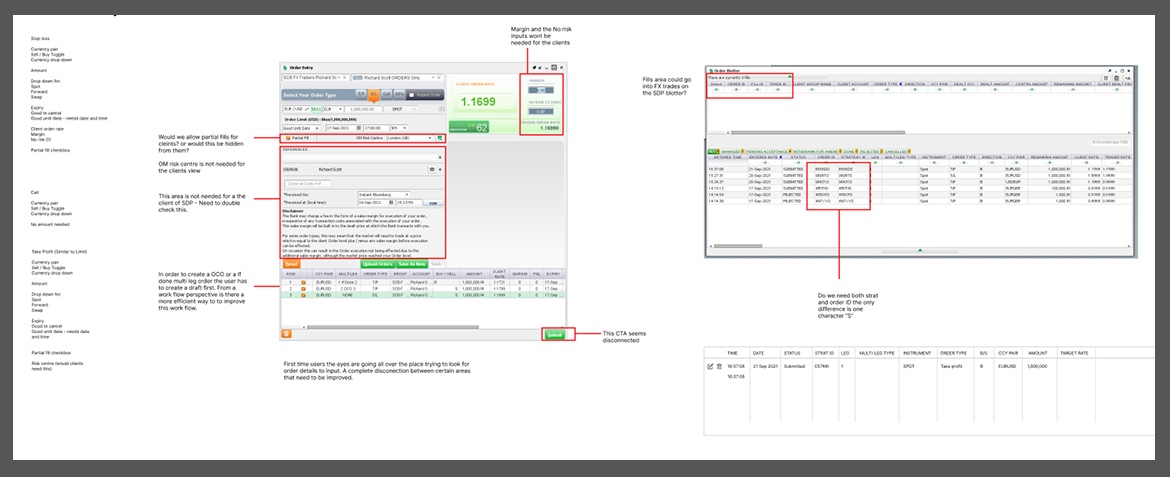
My initial steps involved thoroughly examining the existing platform and its capabilities. After speaking with several traders, it became evident that the old platform required more than minor UX improvements -- it needed a comprehensive redesign.
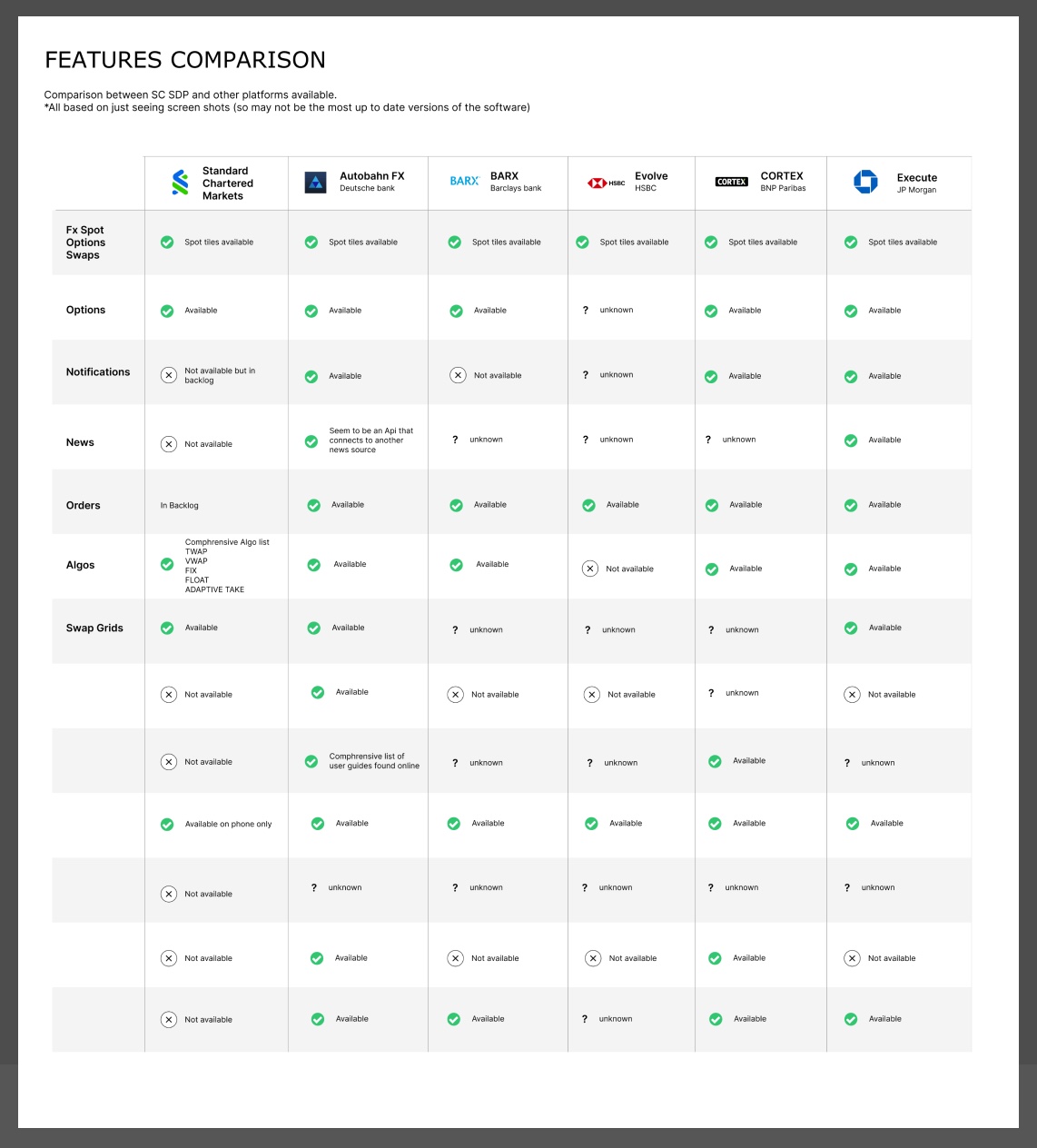
I conducted a features comparison by studying other single dealer platforms, though this proved challenging as few SDPs are publicly accessible. This research helped identify industry standards and potential areas for innovation.
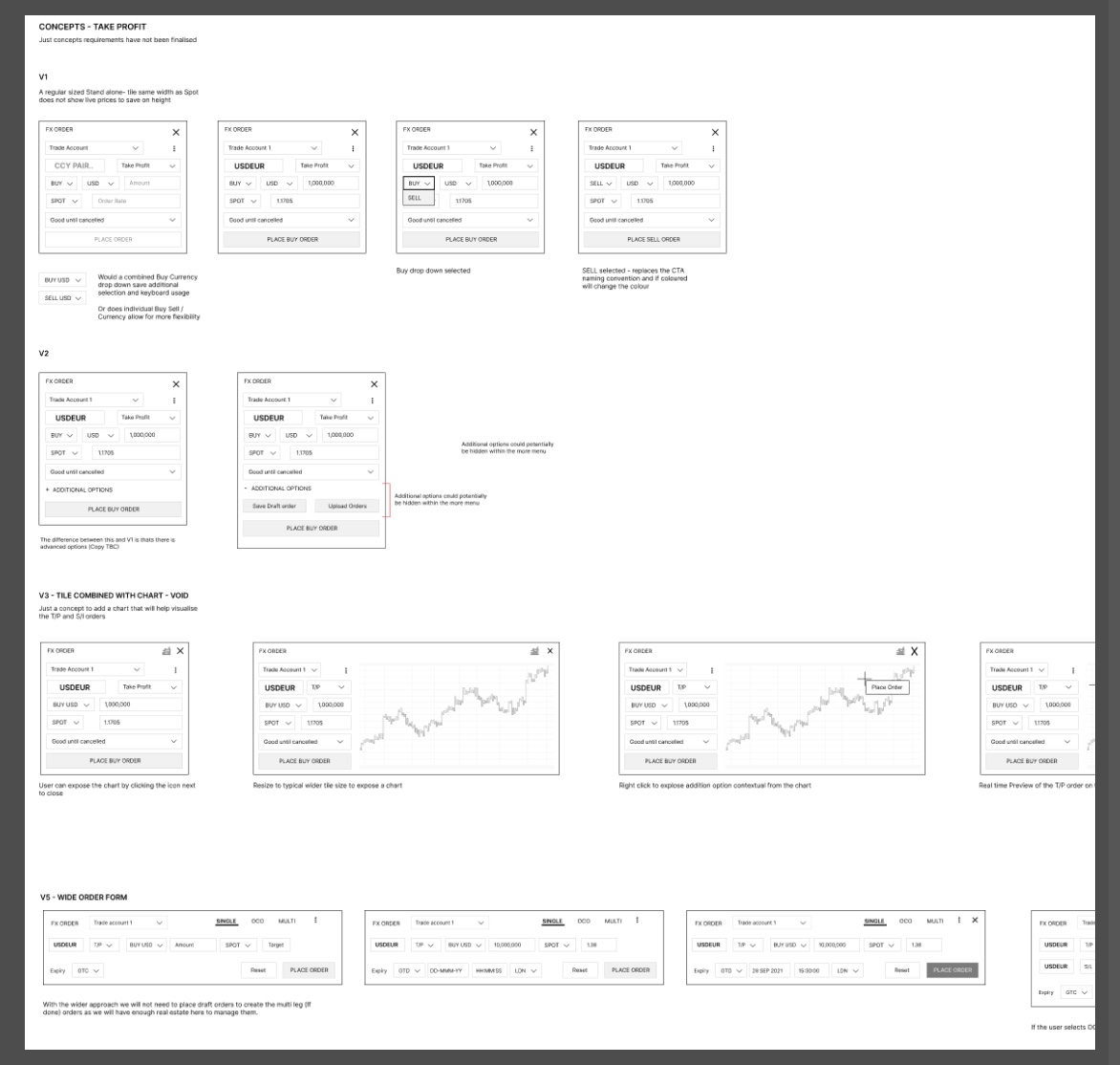
Initial Wireframing: I began with list-style wireframes for the trading tile, responding directly to trader feedback requesting a more streamlined approach to order management.
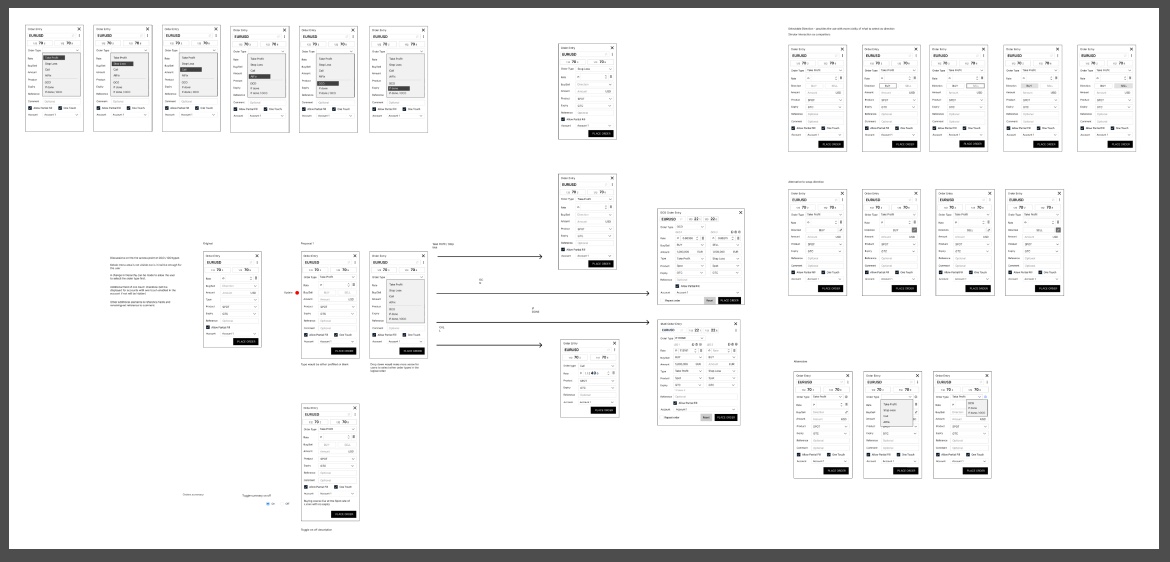
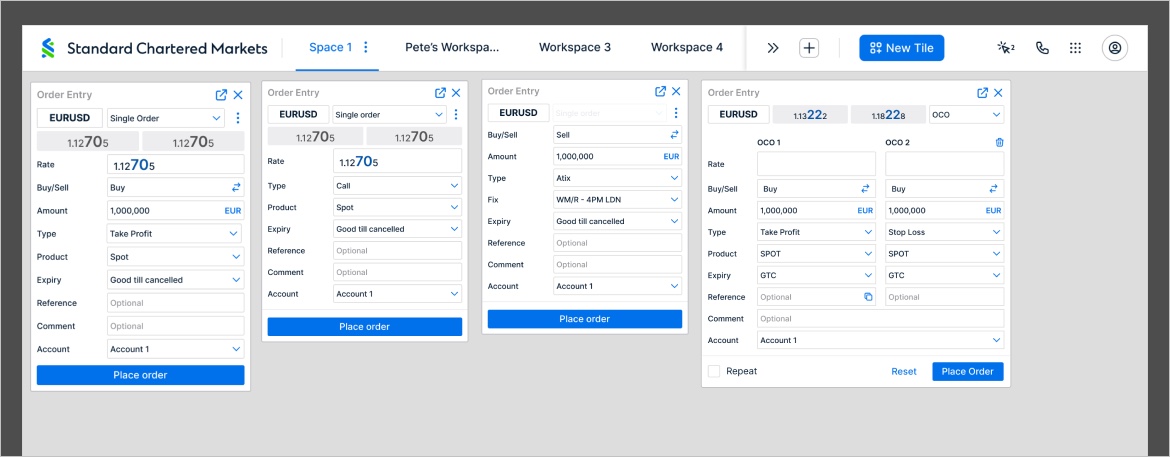
Iterative Design: Through multiple wireframe iterations, I explored different order types and various access points, gradually refining the user experience based on ongoing feedback.
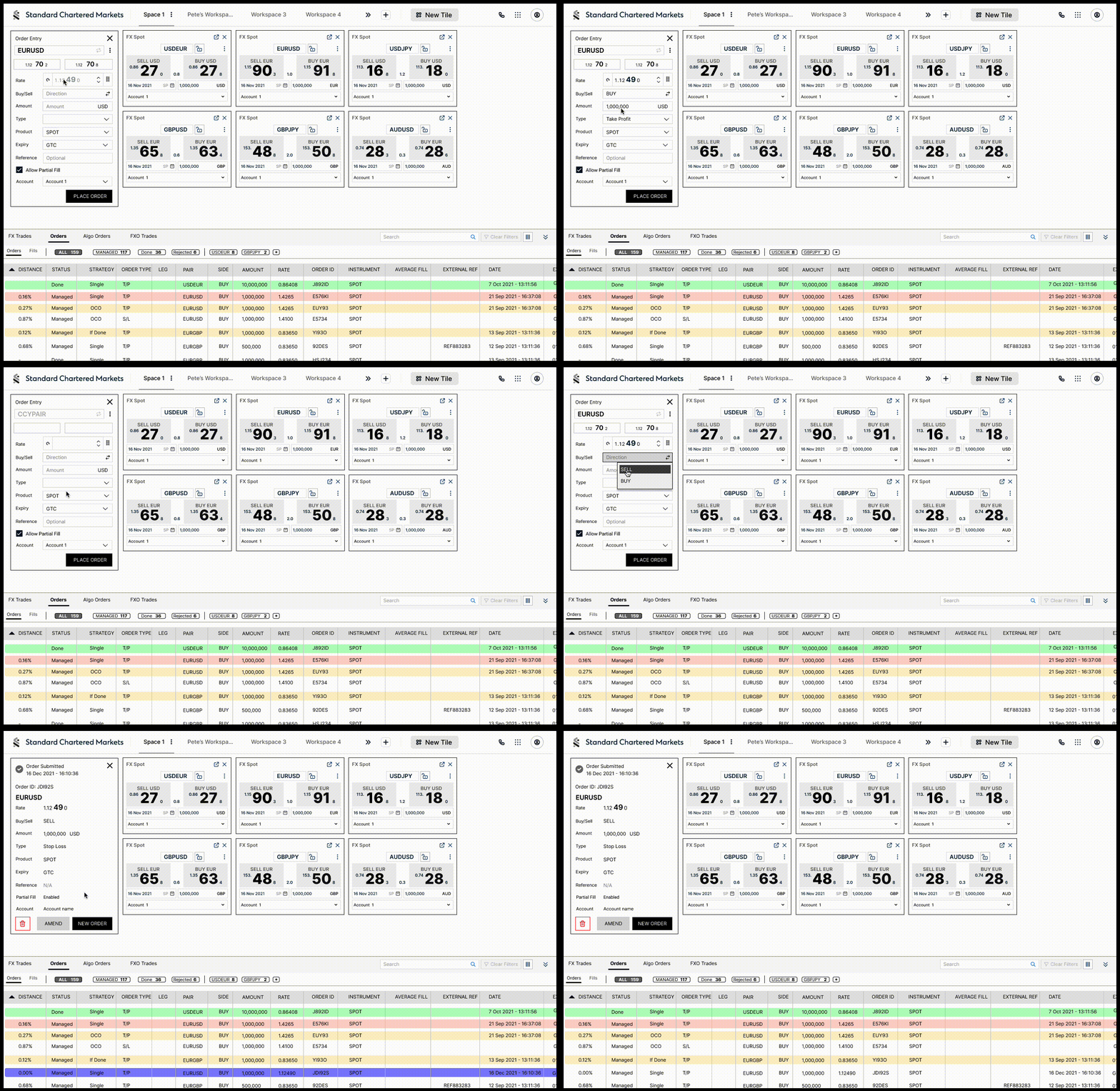
Prototype Evolution: Initially, I created interactive low-fidelity prototypes for traders to test. However, I quickly discovered that traders struggled to engage meaningfully with abstract wireframes, often focusing on irrelevant details rather than core functionality.
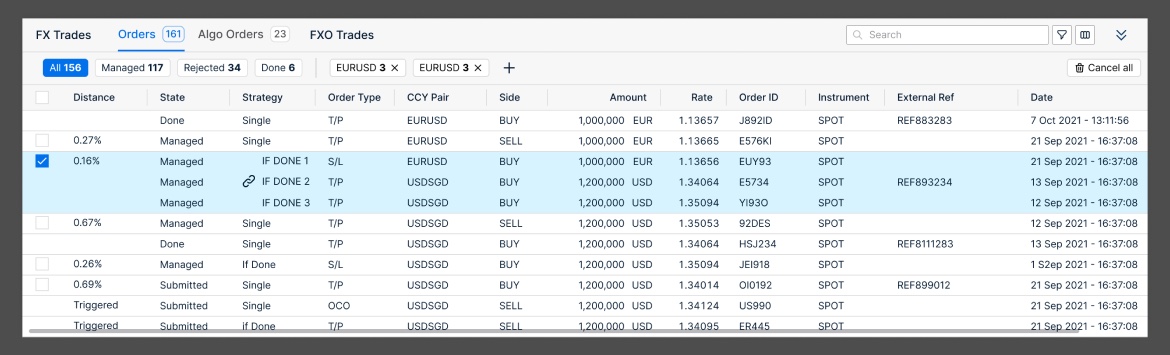
Fidelity Adjustment: To address this challenge, I shifted to high-fidelity UI designs and prototypes, which proved much more effective for trader evaluation and feedback. This approach allowed users to visualise the final product more accurately and provide more relevant input.
The high fidelity light version of the platform visualised.
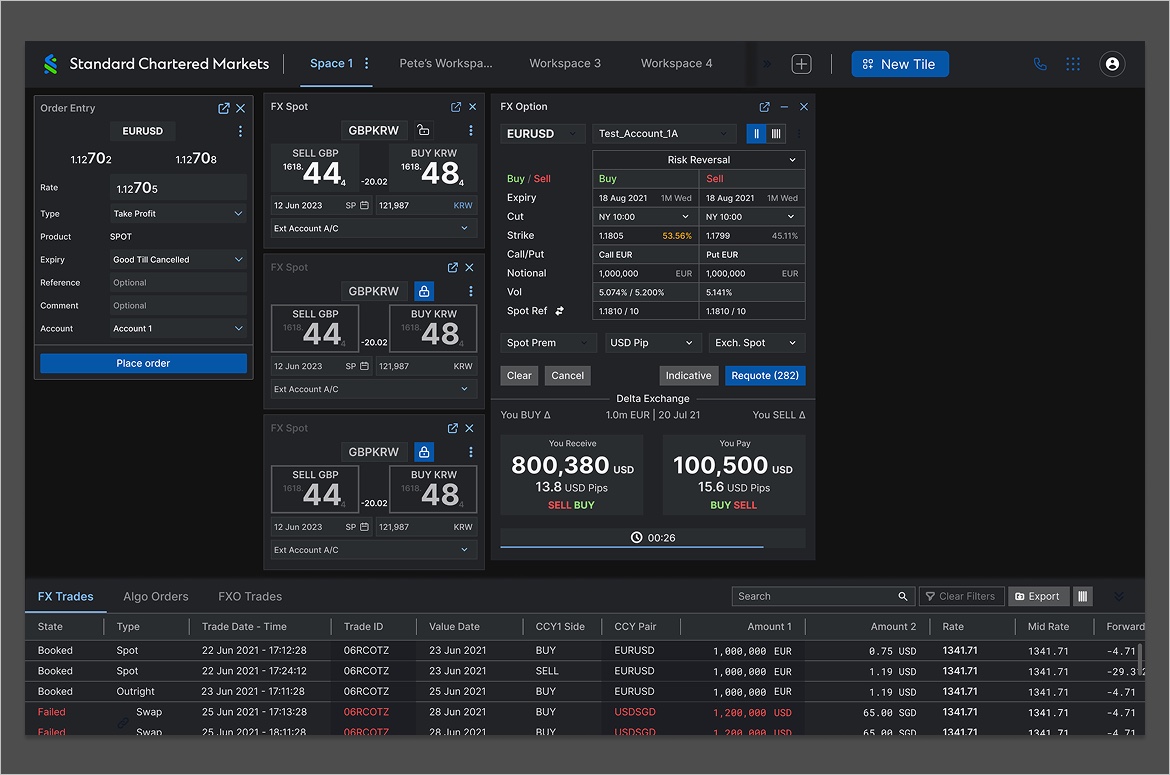
The high fidelity dark themed version of the platform visualised.
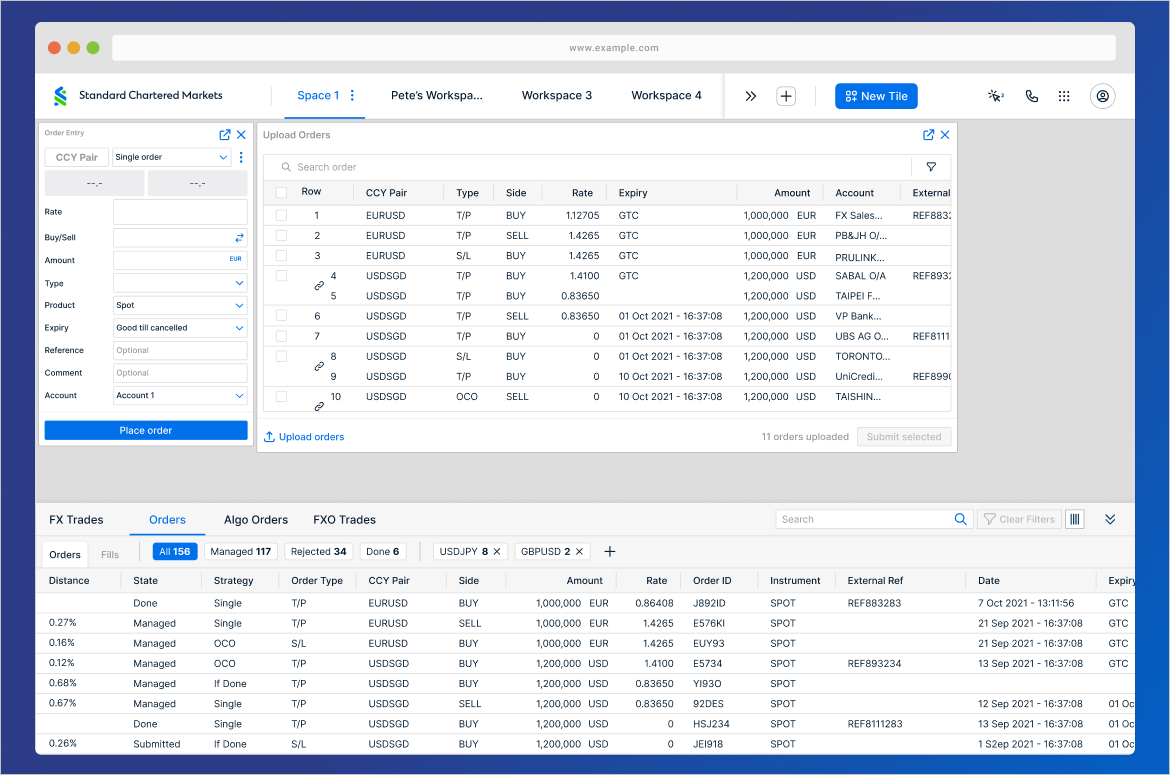
Order uploads conceptual designs.